

Wall Street’s artificial intelligence boom is facing a new reality check. After more than $2 trillion in Nasdaq 100 market value disappeared in October, investors are questioning whether massive AI investments can generate enough returns to justify today’s valuations.
The artificial intelligence trade has been one of the strongest forces behind the stock market rally over the past two years. But as November begins, the investment story is becoming more complicated.
Investors are no longer focused exclusively on how much companies are spending on AI. They increasingly want to know when those investments will translate into sustainable profits.
That shift in expectations could become one of the biggest challenges facing technology stocks in the months ahead.
More Than $2 Trillion Wiped From the Nasdaq 100
October delivered a serious warning to investors betting on the AI boom.
According to Reuters, more than $2 trillion in market capitalization disappeared from the Nasdaq 100 during the month as investors reassessed the profitability of major technology companies.
The concern is not necessarily that artificial intelligence demand is disappearing. Instead, the market is questioning whether the enormous investments required to build AI infrastructure can deliver sufficient financial returns.
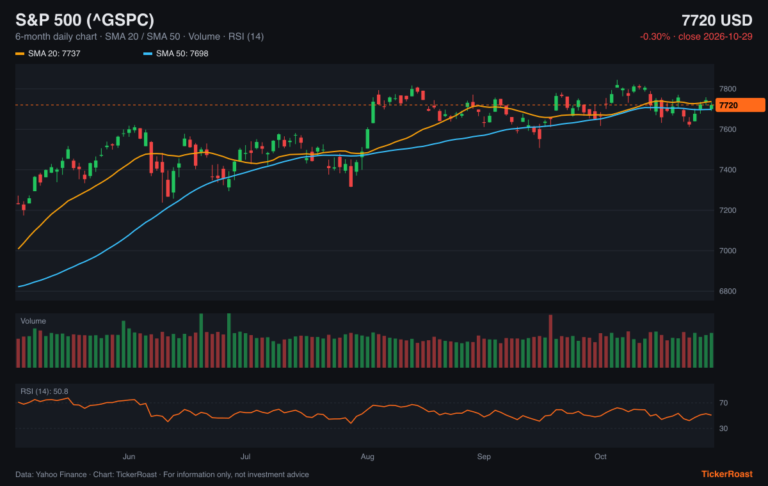
The pressure is particularly important because technology and AI-related stocks account for more than 40% of the S&P 500, making the broader market increasingly dependent on a relatively concentrated group of companies.
When these stocks struggle, the impact can extend far beyond the technology sector.
The $1.2 Trillion AI Spending Question
The scale of planned investment is becoming increasingly difficult for investors to ignore.
According to estimates cited by Reuters from Danske Bank, major US hyperscalers could invest approximately $1.2 trillion in AI infrastructure in 2027, following an estimated $900 billion in spending during 2026.
This includes investments in:
- AI data centers and computing infrastructure.
- Advanced GPUs and semiconductor equipment.
- Cloud computing capacity.
- Electricity generation and data center energy infrastructure.
- Networking and high-speed connectivity.
Companies are competing to secure computing capacity before their competitors do. However, building infrastructure does not automatically guarantee attractive returns.
The key question for Wall Street is whether AI-related revenue will grow quickly enough to justify the enormous capital expenditure.
If monetization disappoints, investors could begin demanding stronger cash flows, lower spending or more conservative growth forecasts.
Oracle, Marvell and the Changing AI Investment Landscape
Recent stock movements illustrate how sensitive investors have become to AI-related spending and financing decisions.
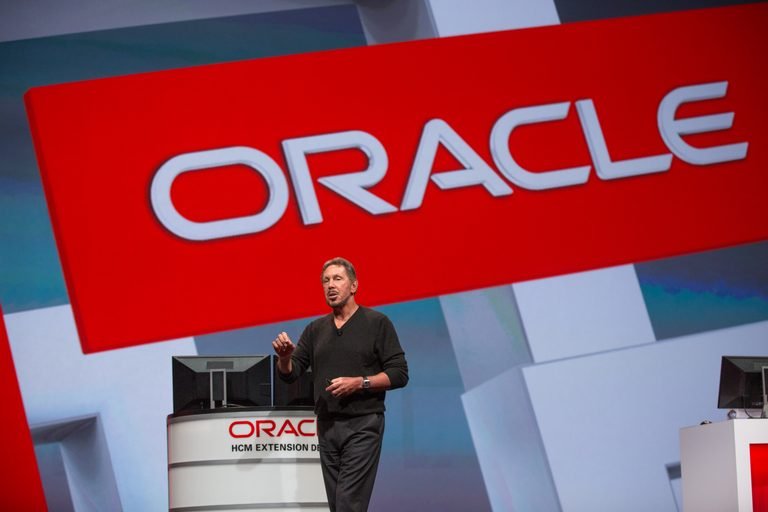
Oracle shares came under pressure after the company outlined plans to raise approximately $20 billion to support its AI infrastructure expansion, according to Barron’s.
Meanwhile, Marvell announced a $115 billion all-stock acquisition of Lumentum, highlighting the enormous strategic value that companies are placing on AI connectivity infrastructure.
These developments illustrate two different sides of the same investment cycle.
On one side, companies are committing enormous amounts of capital to secure their positions in the AI economy. On the other, investors are becoming increasingly selective about how those investments are financed and whether they can generate acceptable returns.
The market is not necessarily abandoning AI. It is becoming more demanding.
Rising Interest Rates Could Make the Problem Worse
AI spending is not the only risk facing technology companies.
Higher borrowing costs could make large infrastructure projects more expensive and reduce the attractiveness of future investments.
Reuters reported that global financial markets are also dealing with persistent inflation, geopolitical uncertainty and elevated government debt.
The US 10-year Treasury yield has been hovering around the 5% level, a threshold that some investors consider particularly important for financial stability.
Higher yields can put pressure on technology valuations because investors place a greater discount on profits expected years into the future.
This creates a difficult combination: AI companies need substantial investment to expand, while higher financing costs could make those investments less attractive.
Strong Earnings Are Not Enough to Calm Investors
There is still an important reason not to assume that the AI trade is finished.
Corporate earnings remain relatively resilient.
Reuters reported that 84% of S&P 500 companies that had reported third-quarter results had beaten analyst consensus estimates, based on LSEG data.
That suggests the broader corporate earnings environment remains healthier than the recent market volatility might indicate.
However, beating earnings expectations is no longer necessarily enough to satisfy investors.
Markets increasingly want evidence of sustainable AI revenue growth, improving margins and disciplined capital allocation.
Companies that deliver strong results but continue to increase spending without demonstrating attractive returns could face additional scrutiny.
What Investors Should Watch in November
Several developments could determine whether the technology sell-off stabilizes or develops into a broader correction.
1. AMD’s quarterly results
AMD’s upcoming earnings report will provide another important indication of demand for AI chips and data center infrastructure. Investors will pay particular attention to forward guidance and the company’s ability to compete in an increasingly crowded AI semiconductor market.
2. Big Tech capital expenditure
Investors will continue monitoring spending plans from major cloud providers. Any indication that infrastructure spending is accelerating faster than expected revenue could increase concerns about profitability.
3. Treasury yields and inflation
A sustained increase in borrowing costs could put additional pressure on high-growth technology stocks and companies relying on debt to finance expansion.
4. The US economic outlook
Labor market data, including the JOLTS job openings report, will help investors assess the strength of the American economy and the Federal Reserve’s future policy options.
5. Political uncertainty
The November 3 US midterm elections add another layer of uncertainty for financial markets, particularly regarding fiscal policy, regulation and the broader economic outlook.
Is This the End of the AI Stock Rally?
Probably not enough evidence exists to reach that conclusion.
Artificial intelligence remains a major technological and economic development, and demand for computing infrastructure could continue expanding for years.
However, the distinction between a successful technology and an attractive stock investment is becoming increasingly important.
A company can benefit from AI adoption while its shares still decline because investors previously priced in unrealistic growth expectations.
The next phase of the AI trade may therefore reward companies that demonstrate genuine revenue growth, strong cash generation and disciplined investment rather than those simply announcing increasingly ambitious spending plans.
For Wall Street, the question is no longer just who is spending the most on AI.
It is who will ultimately make money from it.
TickerRoast Takeaway: The AI revolution may still be in its early stages, but the market is entering a more demanding phase. Investors are beginning to distinguish between AI infrastructure spending and actual financial returns. That distinction could define the next major move in technology stocks.
Sources:
- Reuters – Global markets were already fragile. Big AI bets could break them (November 3, 2026)
- Barron’s – Marvell, Lumentum, Oracle, SpaceX, Rivian, Apple, Palantir, and More Stocks That Explain Today’s Market
- Google Trends – Trending searches in the United States
Disclaimer: This article is provided for informational and educational purposes only. It does not constitute financial, investment, trading, or legal advice. The information presented reflects publicly available sources and market developments at the time of publication and may contain errors or omissions. Market conditions can change rapidly, and past performance is not indicative of future results. TickerRoast does not recommend buying, selling, or holding any particular security. Readers should conduct their own research and consult a qualified financial professional before making investment decisions. Investing in financial markets involves risk, including the possible loss of principal.
Anonymous reader poll, just for fun. Not investment advice.
Read next

Get the daily market briefing
The stories that move markets, in your inbox every trading day at 9 a.m. ET. Free, unsubscribe anytime.